Canfield Solitaire: A High-Difficulty Classic Solitaire Game of Strategy, Patience, and Precision
- By : Levzver
- Category : Canfield Solitaire
- Tags: Canfield Solitaire
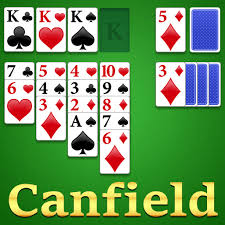
Canfield Solitaire: A Challenging and Rewarding Solitaire Variation
If you’ve ever found Klondike Solitaire a little too forgiving, Canfield might be exactly what you’re looking for. It’s widely considered one of the hardest solitaire variants out there — and not in a cheap, frustrating way. The difficulty is baked into the structure itself, which means when you do win, it actually feels like you earned it.
What Makes It Different
Most solitaire games give you room to breathe. Canfield doesn’t. The whole thing is built around limited resources and tight restrictions that force you to think carefully before almost every move.
The most distinctive feature is the reserve pile — a stack of 13 cards where only the top one is available to you at any time. Once you use it, it’s gone. There’s no reshuffling it back in, no second chances. That single mechanic changes the entire feel of the game.
Then there’s the foundation system. Unlike Klondike, where foundations always start with Aces, Canfield picks a random base rank at the start of each game. So you might be building from 7s, or from 3s — you don’t know until the game begins. It adds a layer of unpredictability that makes planning ahead genuinely harder.
Put those two things together with restricted tableau movement and a stock pile you have to use carefully, and you’ve got a game that punishes careless play fast.
How It Works
The setup is straightforward even if the gameplay isn’t. You start with:
- A reserve pile of 13 cards
- Four foundation piles, one per suit
- A few tableau columns for temporary card placement
- A stock pile to draw from when you’re stuck
The first card dealt sets the base rank for all four foundations. Everything builds up from there in sequence, wrapping around if needed. In the tableau, you’re building downward in alternating colors — same as Klondike — but with far fewer moves available at any given moment.
The stock pile is there as a lifeline, but leaning on it too heavily or too early will cost you later. Timing matters a lot.
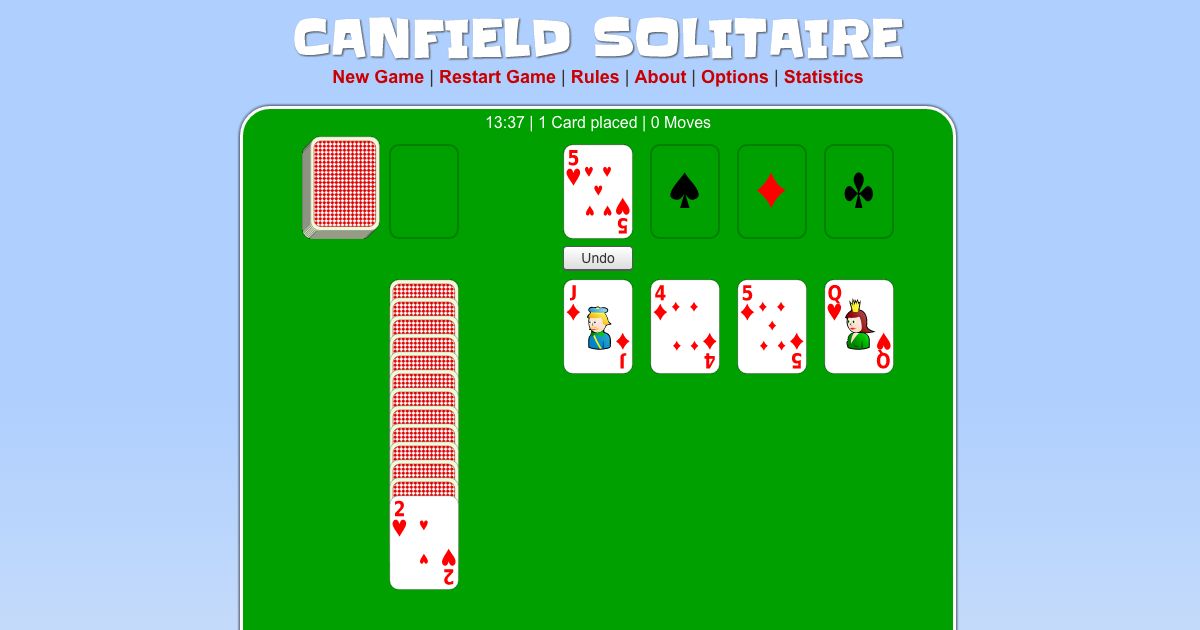
The structure of Canfield Solitaire is simple to understand but difficult to master in practice. The game begins with a shuffled deck and a specific layout consisting of several key components.
The main elements include:
– A reserve pile containing 13 cards
– Four foundation piles (one for each suit)
– Tableau columns used for temporary card placement
– A stock pile for drawing additional cards
At the start of the game, one card determines the foundation base rank, and all foundation piles must begin from that value and build upward in sequence.
The reserve pile is one of the most important and restrictive parts of the game. Only the top card of the reserve is playable at any time, and once used, it cannot be replaced. This creates constant pressure, as every move must be carefully considered.
Tableau building follows descending order with alternating colors, similar to Klondike, but available moves are often far more limited.
The stock pile allows players to cycle through additional cards, but access is restricted, meaning timing is critical.
The Strategic Depth of Canfield Solitaire
Canfield Solitaire is not just a game of patience—it is a game of deep strategic planning. Because of its restrictive structure, players must think several steps ahead at all times.
One of the most important aspects of strategy is resource management. Every card in the reserve and tableau has high value, and wasting a key card early can significantly reduce your chances of winning.
Another crucial element is timing. Knowing when to move a card to the foundation versus keeping it in play can determine whether a game becomes winnable or impossible.
Unlike easier solitaire games, Canfield rarely allows recovery from poor decisions. This makes careful planning essential from the very first move.
Why It’s So Hard
The win rate for Canfield is genuinely low — even for experienced players. A few things combine to make it that way:
- You only ever have access to the top reserve card
- The foundation starting rank is random every game
- Tableau options are often very limited
- Early mistakes are hard to recover from
- Poor timing with the stock pile can sink an otherwise playable hand
It’s one of those games where luck sets the stage, but skill determines whether you can actually do anything with what you’re dealt. A lot of hands simply aren’t winnable no matter what you do — recognizing that early and resetting is itself a skill.
The Strategic Side
Once you get past the basics, Canfield becomes a genuine exercise in forward thinking. You’re not just asking “what move can I make?” — you’re asking “what does this move close off three turns from now?”
Resource management is everything. The reserve pile is precious. Every card in it has potential value, and burning through it without a clear reason is one of the fastest ways to lose a winnable game.
Foundation timing is another thing that separates good players from great ones. Moving a card to the foundation feels like progress, but sometimes keeping it in the tableau gives you more flexibility. Knowing when to commit and when to hold is something you develop over time, not something you can read in a guide.
Mistakes Most Players Make
The same errors come up over and over, especially early on:
- Burning reserve cards too quickly without thinking ahead
- Playing reactively instead of planning a few moves out
- Rushing cards to the foundation when they’re still useful in play
- Drawing from the stock impulsively when the tableau still has options
- Not recognizing when a game is lost and resetting too late
Honestly, avoiding these mistakes matters more than any advanced strategy. The fundamentals are where most games are won or lost.
Tips That Actually Help
Treat the reserve like it’s running out — because it is. Every reserve card you play is one you can’t get back. Before you use one, ask yourself whether there’s another way.
Build foundations early, but not blindly. Getting foundations moving frees up space and opens options. Just make sure you’re not stranding cards you still need in play.
Think in sequences, not single moves. One good move that leads to two bad ones isn’t a good move. Try to trace out what happens two or three steps down the line before committing.
Use the stock deliberately. Drawing cards feels like doing something productive, but it can quietly reduce your options if you do it without purpose. Scan the tableau first.
Know when to walk away. Some deals aren’t winnable. Experienced players get a feel for this and don’t waste time forcing a dead hand. Reset and start fresh — there’s no shame in it.
Why People Keep Playing It
It’s the difficulty, honestly. Canfield attracts a certain kind of player — someone who doesn’t want wins handed to them and who finds satisfaction in the process of figuring something hard out. The low win rate means victories are genuinely rare, and rare things feel meaningful.
There’s also something to the unpredictability. Because the foundation rank changes every game and the reserve plays out differently each time, no two games feel the same. You can’t fall into autopilot. The game keeps demanding your attention.
Final Thoughts
Canfield Solitaire isn’t for everyone, and it doesn’t try to be. If you want something relaxing and easy to win, Klondike is right there. But if you want a solitaire game that takes you seriously as a player and demands real thought — Canfield delivers that in a way very few card games can.
Every win is a small victory worth savoring. And every loss teaches you something, if you’re paying attention.