
Hearts: A Strategic Trick-Taking Game of Avoidance and Skill
Most card games want you to win as much as possible. Hearts wants you to lose gracefully. That flip in objective is what makes it so interesting — and what keeps people coming back to it for decades.
The goal isn’t to collect the most points. It’s to collect the fewest. Every Heart you take is a penalty point, and the Queen of Spades will cost you thirteen all by herself. So while everyone else at the table is playing cards, you’re also playing people — trying to figure out who’s holding what, who’s about to do something dangerous, and how to make sure none of it lands in your hand.
How It Actually Works
Four players, a standard deck, 13 cards each. Simple enough start.
Before the round begins, everyone passes three cards to another player. The direction rotates each round — left, right, across, or sometimes no pass at all. This is where a lot of the game lives. You’re trying to offload dangerous cards while also thinking about what you might be handing your neighbor to work with.
Once play starts, someone leads a card and everyone else has to follow suit if they can. If you can’t follow suit, you can play anything — including Hearts or the Queen of Spades, which is how penalty cards start finding their way into people’s hands. The highest card of the leading suit takes the trick, and whoever wins it picks up whatever penalties were in there.
Play continues until someone hits the score limit — usually 50 or 100 points. At that point, the player with the lowest score wins. Simple rules, genuinely complicated game.
The Part That Makes It Interesting
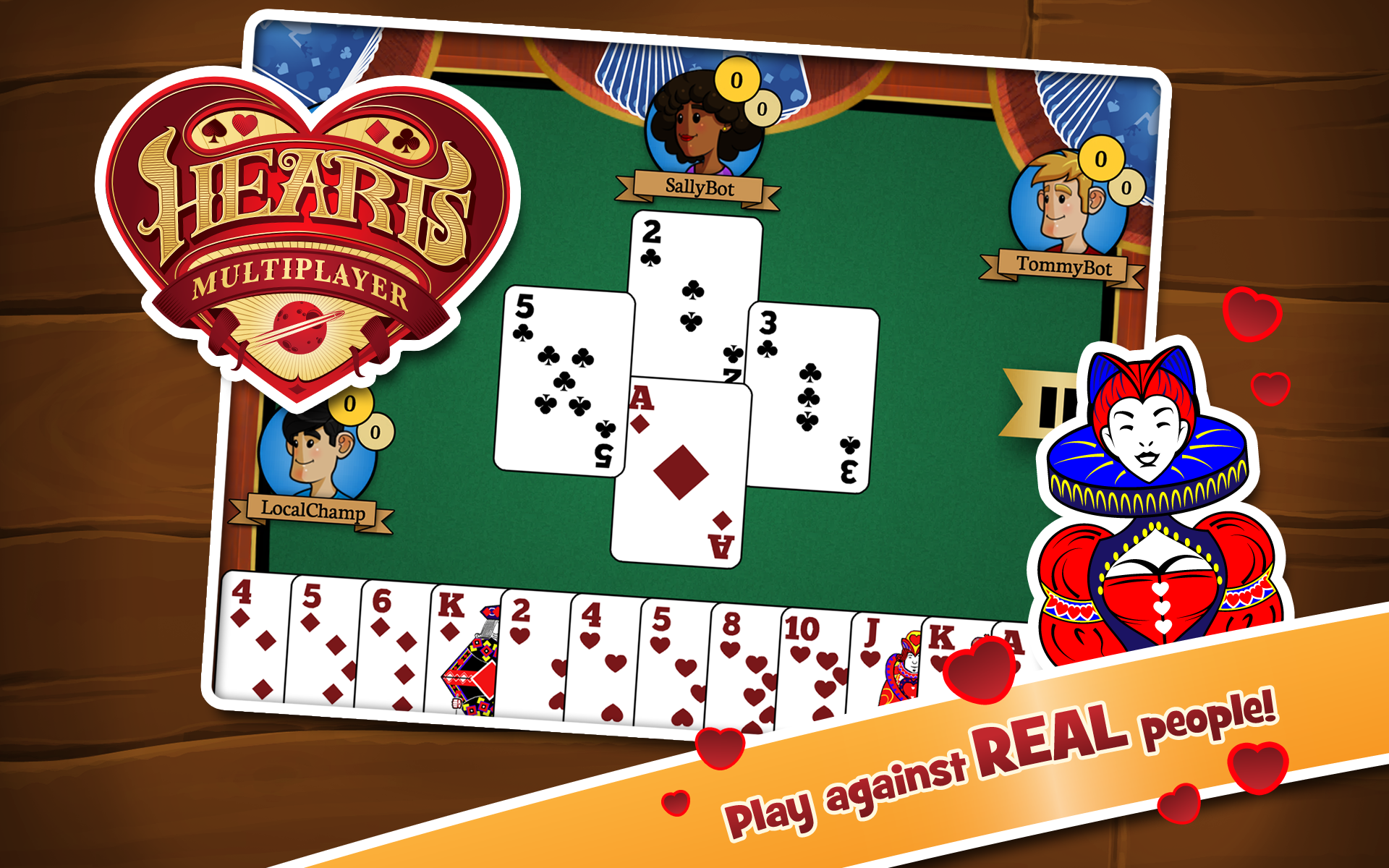
Winning tricks isn’t the goal — avoiding the wrong ones is. That distinction sounds small, but it completely changes how you think about every card you play.
You’re constantly making judgment calls. Is winning this trick worth the risk? What’s still out there that could hurt me? Who at this table is trying to force something nasty my way?
Card tracking matters a lot once you start taking the game seriously. Knowing which suits have been exhausted and which dangerous cards are still floating around helps you plan ahead and avoid getting caught. Players who don’t track cards tend to get surprised. Players who do tend to win.
Then there’s the psychological side. Hearts is genuinely a mind game. People structure their plays to push penalty cards onto opponents, and reading those intentions — while disguising your own — is where the real skill gap shows up.
Shooting the Moon
Worth knowing about, even if you’re not ready to try it yet. Shooting the moon means intentionally collecting every single penalty card in a round — all 13 Hearts and the Queen of Spades. If you pull it off, instead of taking 26 penalty points, everyone else gets 26 added to their score.
It’s a high-risk, high-reward move that can flip the entire game in one round. It’s also very easy to fail at, and a failed moon attempt is usually catastrophic. Most experienced players attempt it sparingly and only when the cards clearly support it.
Strategies That Actually Help
Respect the Queen of Spades. She’s the most dangerous card in the game. Keep track of whether she’s been played. If she hasn’t, adjust accordingly — someone is holding her, and they’ll play her the moment you give them an opening.
Think about passing carefully. The passing phase is one of your best tools. High Spades are obvious targets to pass, but also think about what you’re passing to — you don’t want to build someone a hand that helps them shoot the moon.
Don’t win tricks you don’t need. Winning feels instinctive in card games. In Hearts, you have to fight that instinct. If a trick looks risky, sometimes the best play is finding a way to not take it.
Track the suits. Once a suit is voided for a player, they’ll start throwing off unwanted cards into those tricks. Knowing who can’t follow suit in what keeps you from getting blindsided.
Stay aware of the score. How you play should change depending on where everyone stands. If someone is close to the limit, the whole dynamic shifts — other players will play more defensively, and opportunities open up.
Mistakes Beginners Make
A few patterns come up constantly with newer players:
Taking tricks aggressively out of habit, without checking what’s in them. Losing track of the Queen of Spades until it’s too late. Passing cards without thinking about the consequences. Failing to notice when someone might be setting up a moon shot. Playing the same way regardless of the score situation.
None of these are hard to fix — they just require slowing down and paying attention to the whole table, not just your own hand.
Why It’s Lasted This Long
Hearts doesn’t need flashy mechanics to stay interesting. The rules haven’t changed, and they don’t need to. What keeps it fresh is the people you’re playing against and the fact that no two rounds play out the same way.
It’s one of those games that’s genuinely accessible — you can explain the rules to someone in five minutes — but has enough strategic depth that experienced players still find things to think about after years of play. That balance is rare, and it’s exactly why Hearts has been a staple of card game culture for as long as it has.
Final Thoughts
Hearts rewards the kind of thinking that most games don’t ask for: restraint, observation, and the ability to read a situation before it becomes a problem. It’s not about being the most aggressive player at the table — it’s about being the most aware one.
If you enjoy games where patience and attention actually pay off, Hearts is worth your time. Just watch out for the Queen of Spades.